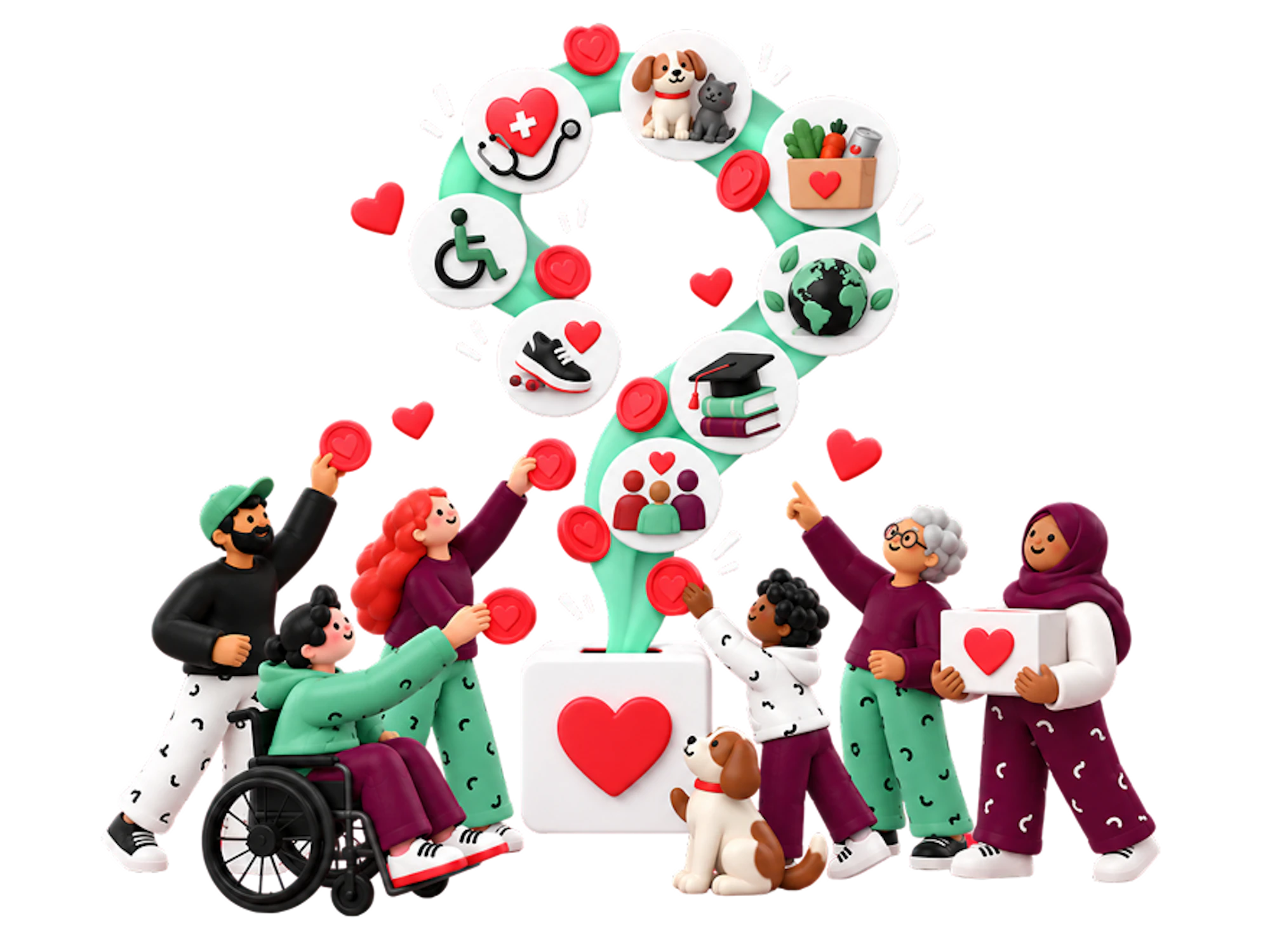

You didn’t donate for a spreadsheet. You donated for a food parcel on someone’s table, a bed in a hospice, an afternoon in the countryside for a child who’s never had one. That’s the reason. A recent investigation into Britain’s biggest charities suggests that money doesn’t always travel as directly as you’d hope.
In a tighter giving climate, the public is starting to notice the gap between what they thought their money was for, and where it actually goes. But none of this means charities are wrong to exist, or that the people running them don’t care. Many are responding responsibly by cutting back-office costs before frontline services. But it does raise a fair question for anyone about to give: how do you know your reason, the one thing you actually wanted to fund, is the thing your money reaches?
That’s where the right fundraising platform comes in. Not as a judgement on charities doing their best in a hard climate, but as a different way to give.
In this article, we will look at the reasons this is happening, the trust gap that donors are now noticing, and why we believe a fundraising platform should help your reason land where you intended.
Where donors think their money goes and where some of it goes instead
As donors, we want our money to go directly to frontline relief. But in reality, funds often go towards supporting core operations, logistics, broader organisational priorities, or flow through opaque channels.
Over the past decade, many of Britain’s largest charities have built out policy, campaigning and communications teams, often funded from the same pot as frontline services. It’s not unusual for a charity best known for distributing essentials to also run a public affairs operation working to change government policy. Valuable work, but not always what a donor giving to put food on someone’s table expects their money to fund.
None of this means charities are wrong to grow, or that the people running them don’t care. Policy work changes the systems that cause poverty in the first place; experienced leadership costs money. But it does mean the line from “I gave” to “it arrived” is rarely as short, or as visible, as donors assume.

Why this is happening
Donations don’t 100% go to frontline support. And there is good reason for this. Charities need operating funds to run safely, comply with regulations and raise future money.
The reasons money goes beyond the frontline often include:
- Core overheads and staff: Charities have to pay for offices, IT, insurance, legal compliance, safeguarding, and staff wages, including specialist managers and senior leaders needed to run complex organisations.
- Fundraising and outreach costs: Raising money requires campaigns, events, staff and sometimes third-party fundraising platforms. Using a fundraising platform is an extremely efficient way to raise funds. We keep fees low so charities keep more of what they raise. It’s free for fundraisers to set up a page.
- Retail and trading operations: Turning donated goods into usable funds through charity comes with its own costs, such as rent, utilities and staffing.
Understanding why money goes beyond the frontline is fair. The real question for donors isn’t whether overheads exist; it’s whether they can actually see them.
The trust gap donors are noticing
People are becoming more hesitant to give. Not because they care less, but because they’re noticing a gap, between the goodwill a charity asks for and what actually happens to their money once it’s given.
A few things are driving that gap:
- Unclear impact and fund allocation: Donors often can’t see where their money actually went, or what it achieved once it arrived.
- Guilt-heavy and frequent asks: Repeated, pressure-led messaging makes people pull back rather than give more.
- Lack of appreciation: Donors who give and hear nothing back, no thank-you, no sense of what their gift did, are less likely to give again, however much they cared the first time.
The problem isn’t generosity running out. It’s trust running thin, and finding a charity you can trust with your reason is where that starts to change.

Find the charities closest to the work
No fundraising platform can show you exactly how a charity spends your £10 once it lands in their account. What GoodHub can help with is choosing who gets that £10 in the first place.
Every UK charity, not just the big names
Every registered UK charity can be found and supported on GoodHub, including thousands of smaller, specialist organisations most donors have never heard of. And smaller can often mean more efficient.
They tend to be embedded in the communities they serve, with little standing between a donation and the person or cause it’s intended to help.
Overlooked, but just as vital
Larger organisations, earning £10 million or more a year, receive the majority of government and institutional funding. Smaller charities, doing work just as vital and often closer to the frontline, are more reliant on public donations.
That’s what GoodHub’s SmartSearch is built for. It helps you find those charities.
Giving made simple
No subscription fees, competitive payment and Gift Aid processing fees, and an optional contribution at checkout if you’d like to support us too.

Find the charity already doing it
Search thousands of registered UK charities on GoodHub and give directly to the work you care about.
Your reason deserves to land where you intended
Everyone has a reason to give. And once you’ve found yours, you want it supported as fully as possible.
A food parcel on someone’s table. A bed in a hospice. An afternoon in the countryside for a child who’s never had one. Whatever shape your reason takes, it deserves to reach exactly that.


Put your reason into action
Start fundraising for what matters to you, with expert support along the way.